
Five Hawai’i island trends that property owners should be watching

The latest Colliers Hawai’i Island Market Report offers a reassuring message for commercial real estate owners: despite ongoing economic uncertainty nationally, the Big Island continues to demonstrate resilience across several key sectors. Visitor arrivals are increasing, unemployment remains low, and industrial demand continues to outpace supply.
Here are five trends shaping Hawai’i Island commercial real estate through 2026.
1. The economy is still expanding

While economic growth has moderated compared to the rapid post-pandemic recovery period, Hawai’i Island continues to show healthy fundamentals.
Employment increased slightly during 2025, with non-agricultural jobs rising to approximately 74,700 positions. More importantly, unemployment fell from 3.1% to 2.5%, one of the lowest levels seen in recent years.
For commercial property owners, a healthy labor market matters because jobs drive business formation, expansion decisions, and demand for commercial space. When employers are hiring, tenants are generally more confident about growth and long-term commitments.
2. Tourism has regained momentum

Tourism remains one of the most important economic drivers on Hawai’i Island, and 2025 marked a significant improvement.
Visitor arrivals increased more than 4% year-over-year to approximately 1.75 million travelers. Visitor spending exceeded $3.23 billion, matching record levels and reinforcing the strength of the island’s hospitality economy.
The impact extends far beyond hotels and resorts. Increased visitor activity supports restaurants, retailers, distributors, transportation companies, service providers, and many of the industrial users that supply those businesses.
For landlords, strong tourism activity creates a positive ripple effect throughout the commercial real estate ecosystem.
3. Industrial remains the tightest sector on the island
Industrial continues to be the strongest commercial real estate sector on Hawai’i Island.
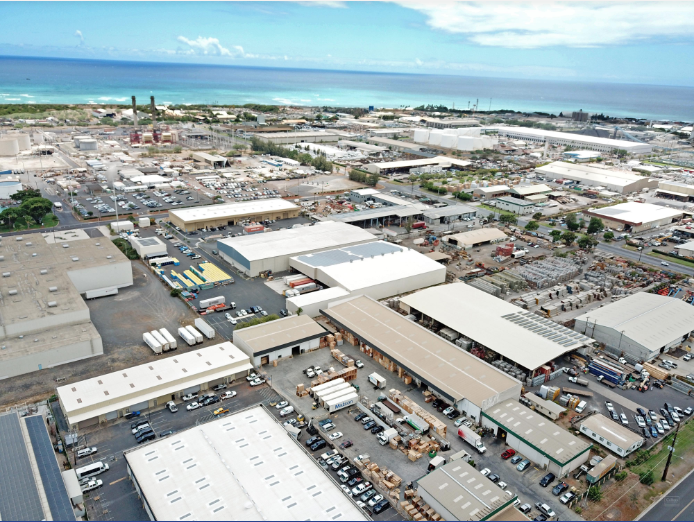
Island-wide industrial vacancy sits at just 1.68%, with East Hawai’i industrial properties operating at an exceptionally tight 0.74% vacancy rate. Several industrial parks are effectively full.
Although the market experienced negative net absorption during the year, much of that reflects a lack of available inventory rather than weak demand. The report projects vacancy could tighten further toward the historic 1% range.
For owners, this creates opportunities to evaluate underutilized land, excess parking, outdoor storage areas, or expansion possibilities that could generate additional revenue.
It also reinforces the importance of maintaining and improving existing assets. In a market with limited alternatives, tenants are increasingly focused on functionality, truck access, loading capabilities, yard space, and operational efficiency.

4. Retail continues to show surprising strength
Retail has quietly become one of the island’s more resilient property types.
The market recorded more than 16,000 square feet of positive net absorption during 2025, while asking rents remained healthy across both East and West Hawai’i.
Much of this performance is tied to the recovery in visitor spending and continued local consumer activity. Well-positioned retail centers with strong tenant mixes continue to perform despite broader concerns about e-commerce and changing consumer behavior.
For owners, this highlights the importance of tenant curation and creating locations that serve both residents and visitors.
5. Office faces the most headwinds
Not every sector is moving in the same direction.
The office market posted negative absorption during 2025, and the report anticipates additional softening in 2026 as economic uncertainty and slower hiring activity affect tenant demand. Vacancy currently stands at 10.53% island-wide.
While office is not facing the same challenges seen in many mainland markets, landlords should be realistic about changing tenant expectations. Flexibility, parking, quality improvements, and tenant experience continue to matter more than ever.
Properties that actively adapt to market conditions will be better positioned than those relying on historical leasing strategies.
What this means for owners
The biggest takeaway from the 2025 Hawai’i Island market report is that fundamentals remain healthy, but competitive advantages matter.
Industrial owners should be evaluating expansion opportunities and functionality improvements. Retail owners should continue focusing on tenant mix and customer experience. Office owners should be thinking proactively about positioning and retention.
Markets are constantly changing. The owners who regularly evaluate their properties against current tenant expectations, competitive alternatives, and emerging market trends are typically the ones who maintain occupancy, protect value, and outperform over the long term.
The data suggests Hawai’i Island remains fundamentally strong. The question for owners is whether their property is positioned to take full advantage of that strength.
Download the full report here. For more information on the comps and considerations behind this report, and to discuss how this affects your specific property, please contact our team. We’ll be pleased to help you.
